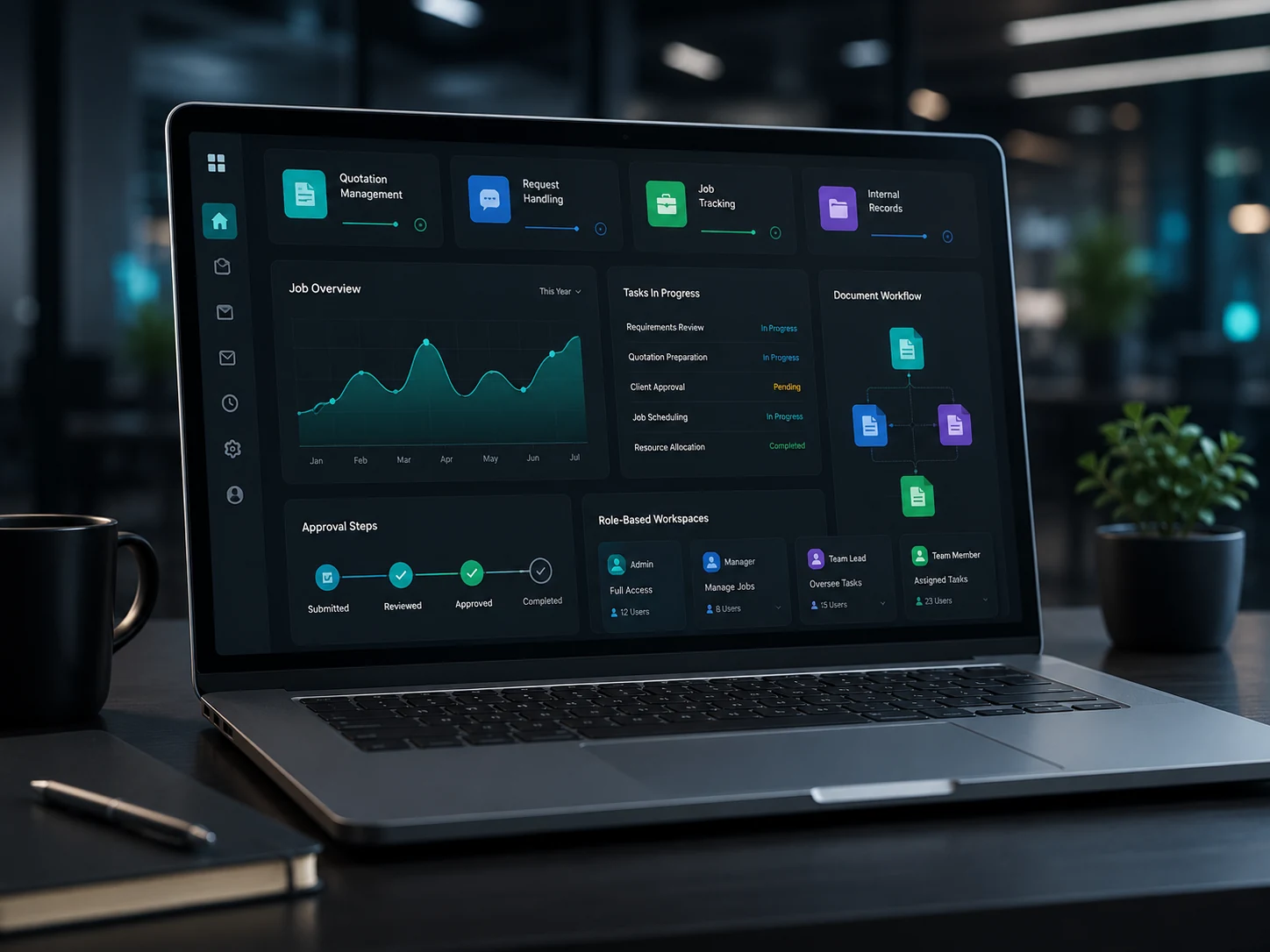
Business Operations Platform Development
A browser-based platform shaped around the operational reality of one organisation: who does what, in which order, and what must be recorded along the way.
FromFrom €1,800
Indicative5–10 weeks
Registered activity 62012 covers business and domestic software development. In practice that means operational platforms, customer-facing applications, household and consumer tools, internal systems, automations and connected portals — designed for a specific process rather than adapted from a template.
What is included in 62012
The registered activity covers two audiences: organisations and the people they serve. Both are delivered as software — designed, written, tested and handed over.
"Domestic software" means software used by individuals and households. It does not mean domestic cleaning, home repair or any other physical service, and DEVNOVA does not manufacture physical smart-home hardware of any kind.
On delivery format. Projects are delivered as responsive browser-based applications unless something different has been agreed in writing. Publication of a native application to the Apple App Store or Google Play is not included by default; where it is required, it is scoped, priced and agreed as part of the project.
Category 01 & 02
Two categories, two services in each. Each has a dedicated page with the full engagement detail.
A browser-based platform shaped around the operational reality of one organisation: who does what, in which order, and what must be recorded along the way.
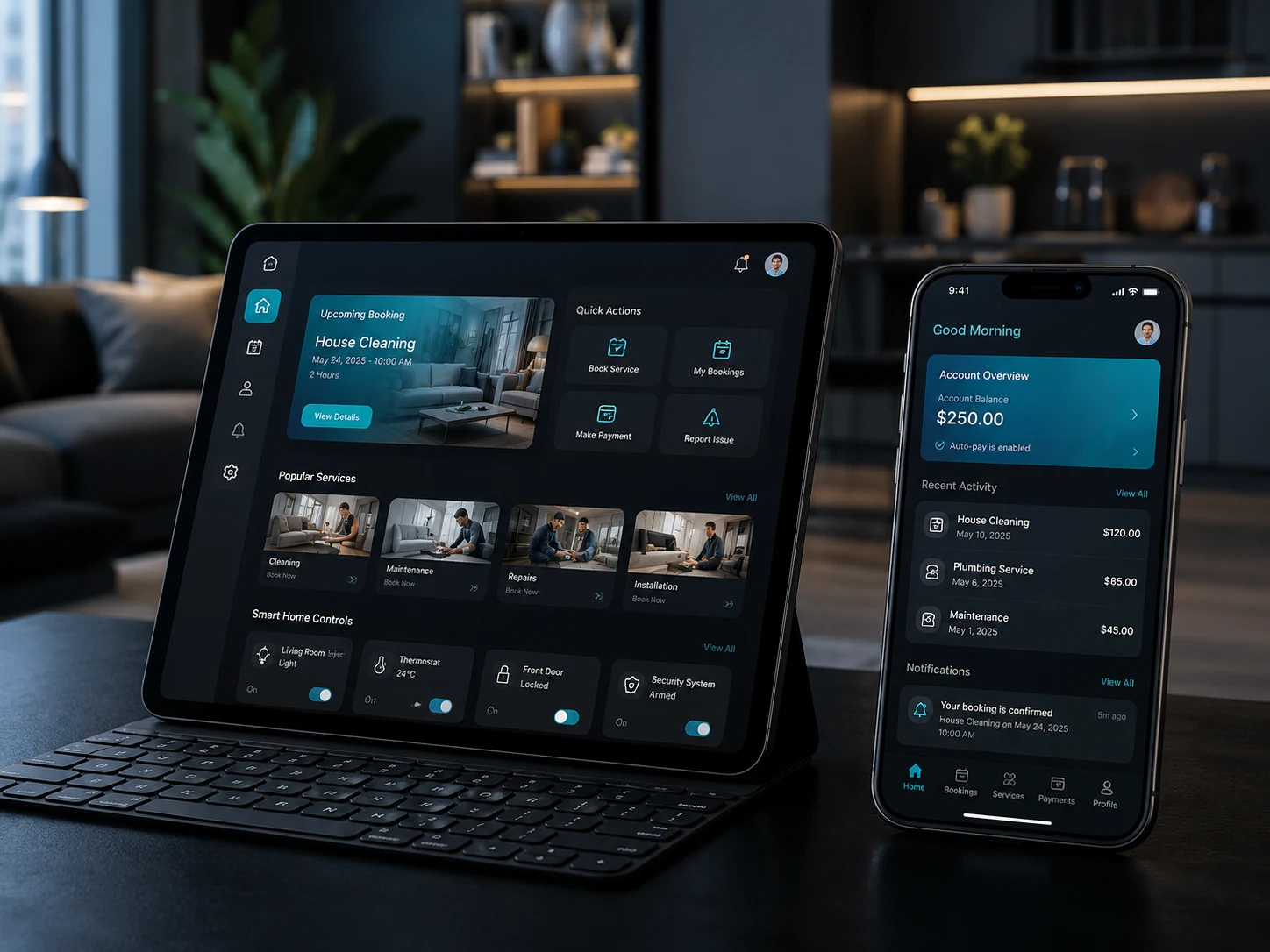
Applications used directly by customers, individuals or households — booking, self-service, account areas and organisation tools, designed around one clear use case.
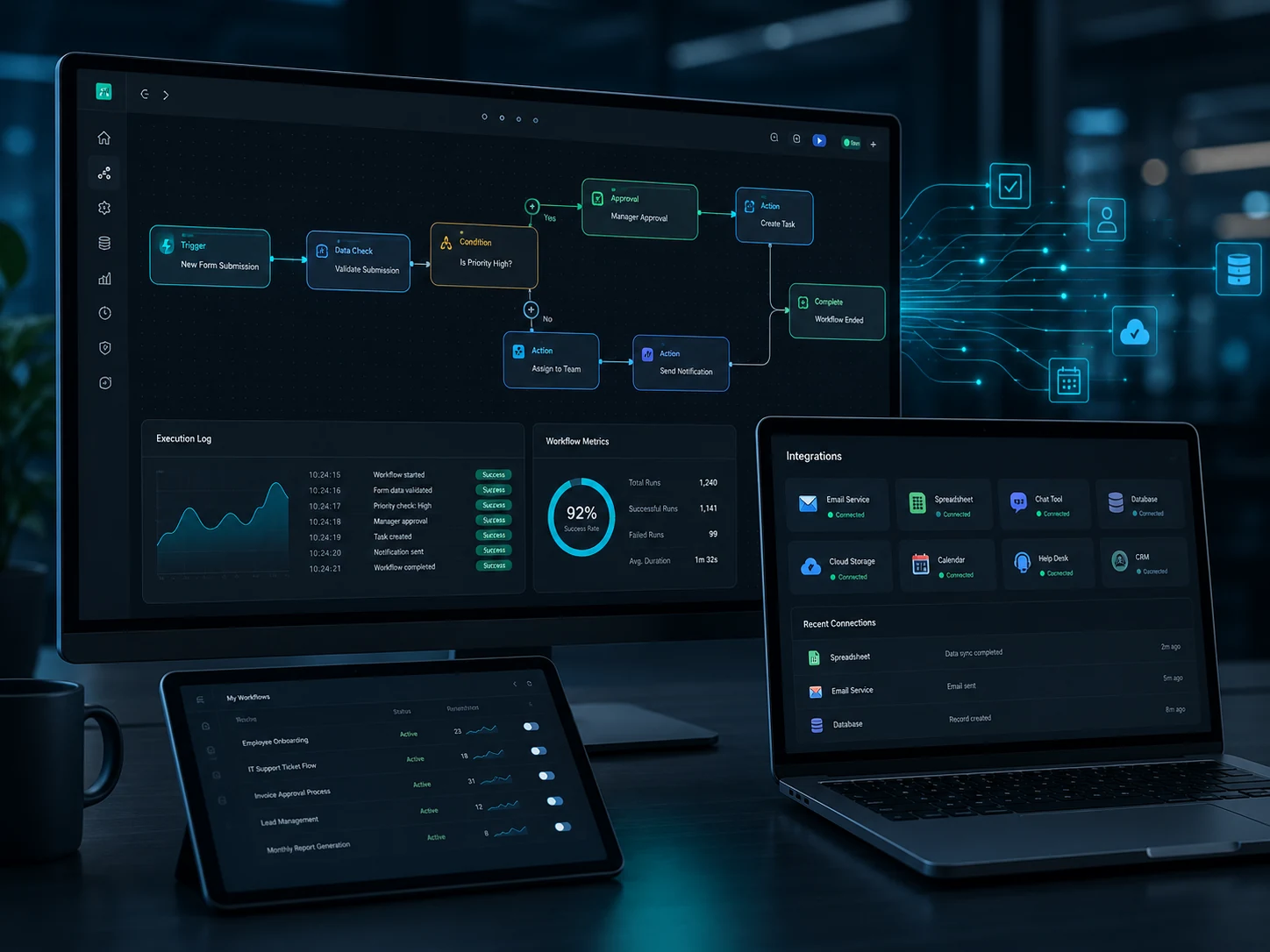
Targeted tools that remove repetitive steps: routing, notifications, generated documents, validation and status visibility across a process that already exists.

Platforms that bring together information from compatible services, subject to what each provider's interface and terms actually permit.
Development philosophy
Most software disappointment comes from building the wrong thing carefully, not from building the right thing badly. These five positions shape how development work is approached.
Interface design starts once the sequence of work is understood. A screen that mirrors a broken process simply makes the problem faster.
Everything agreed is written down before development starts. Anything not written down is a change request, discussed openly rather than absorbed silently.
Well-established tools with good documentation and a wide pool of developers protect a client far better than a fashionable framework nobody local can maintain.
Software is written so it can be changed after handover — clear structure, meaningful names, documented decisions and no undocumented shortcuts.
Data structure receives more design attention than visual polish. Screens are replaced regularly; badly modelled data is expensive for years.
If a requirement is not achievable within the budget or timescale, that is said during scoping — not discovered at the point of delivery.
Typical engagement
The shape below applies to most builds. Shorter projects compress stages; larger projects repeat stages four and five across several increments.
A conversation about the process, the problem and the constraints. No charge, no obligation, and an honest answer if the requirement does not need custom software.
Requirements, user roles, integrations, deliverables, assumptions and exclusions are written down. The proposal states the price, the indicative timescale and what completion means.
Screens, data model, permissions and integration points are outlined and confirmed before code is written, so disagreements surface while they are still cheap.
Work is delivered in parts you can look at and use, rather than a single reveal at the end. Feedback within each increment shapes the next.
Functional testing against the agreed criteria, followed by a review period in which the client tests with real scenarios and raises anything that does not match the specification.
Release to the agreed environment, with documentation covering structure, configuration and routine tasks. Any support arrangement is confirmed separately in writing.
Technology
No claim is made to expertise in every programming language, and no technology list is published to look impressive. What is offered is a considered choice from a deliberately narrow, well-understood set.
Where an organisation already has a technology standard, an internal team or an existing hosting arrangement, the project fits into it rather than working around it.
Testing is part of the build, not a phase bolted on at the end.
What testing does not claim to be. Functional and cross-browser testing is not a formal penetration test, a security certification or a guarantee that software is free of defects. Where a formal security assessment or regulatory audit is required, that is a separate specialist engagement and should be commissioned as one.
Pricing
Development services start between €1,400 and €1,800 depending on the service. Those figures describe a straightforward scope, not a ceiling and not an average.
| Service | Category | Starting price | Indicative duration |
|---|---|---|---|
| Business Operations Platform Development | Bespoke Product Engineering | From €1,800 | 5–10 weeks |
| Customer & Household Digital Applications | Bespoke Product Engineering | From €1,400 | 4–8 weeks |
| Workflow Automation & Internal Tools | Automation & Connected Systems | From €1,500 | 3–7 weeks |
| API-Connected Portals & Data Hubs | Automation & Connected Systems | From €1,700 | 4–8 weeks |
Pricing notice. All prices are indicative starting points. Final pricing depends on project scope, complexity, integrations, documentation, timescale and agreed deliverables. Applicable taxes and third-party costs are confirmed in the written proposal where relevant.
Development questions
Ownership of the custom work produced for a project is addressed in the written agreement, and normally transfers to the client once the agreed fees have been paid in full.
Pre-existing materials, reusable components and third-party libraries remain the property of their respective owners and are provided under their own licence terms. Those elements are identified in the proposal so there are no surprises later.
Yes. An existing specification, wireframe set or design file is a good starting point and usually shortens the scoping stage.
It will still be reviewed before pricing, because specifications written without a build in mind often leave gaps around permissions, error handling and edge cases. Any gaps found are listed and discussed rather than quietly priced in.
Applications are built as responsive browser-based software and are tested across a range of screen widths, so they are usable on phones, tablets and desktop computers.
That is different from a native mobile application distributed through an app store. Native development and store publication are not included by default; if they are required, they are scoped and priced separately.
Small refinements within the agreed scope are normal and are absorbed as part of the work. A change that adds new functionality, a new role or a new integration is documented as a written change request.
The change request states the additional work, the effect on the timescale and any additional cost. Development on it begins once it has been accepted in writing.
Yes, provided responsibilities are clear. The most common arrangement is that DEVNOVA delivers a defined component or application while the internal team retains ownership of the wider platform.
Where an internal team will take over maintenance, handover documentation and code structure are prepared with that team as the intended reader, and a walkthrough session is included in the project scope.
Three things, mainly: a nominated decision-maker who can confirm scope questions, timely feedback during review points, and access to the content, data or systems the project depends on.
Projects slow down far more often through delayed feedback than through technical difficulty. Where dependencies sit with the client, they are listed in the proposal so both sides can see what the timescale assumes.
Development enquiry
Describe how the work is done today, where it breaks down and who needs to use the result. That is enough to establish which of the four development services fits and what a realistic first phase would contain.